FUCEIT · Fundación Centro de Estudios e Investigación del Trabajo

Work. Production. Development.

Ideas to understand. Evidence to decide. Proposals to transform.

Strategic programs

Work area

View all programs
  • Trabajo y Futuro Laboral

    Transformaciones del mundo del trabajo, condiciones laborales, representación, protección social, calidad del empleo, modalidades de contratación, informalidad, negociación colectiva, economía de plataformas, automatización y digitalización.

    Read more

  • Producción y Desarrollo

    Relación entre trabajo, productividad, inversión, competitividad y desarrollo territorial; cadenas de valor, federalismo productivo, transformación sectorial e inversión estratégica. No hay desarrollo sostenible sin empleo de calidad, ni empleo de calidad sin estructura productiva sólida.

    Read more
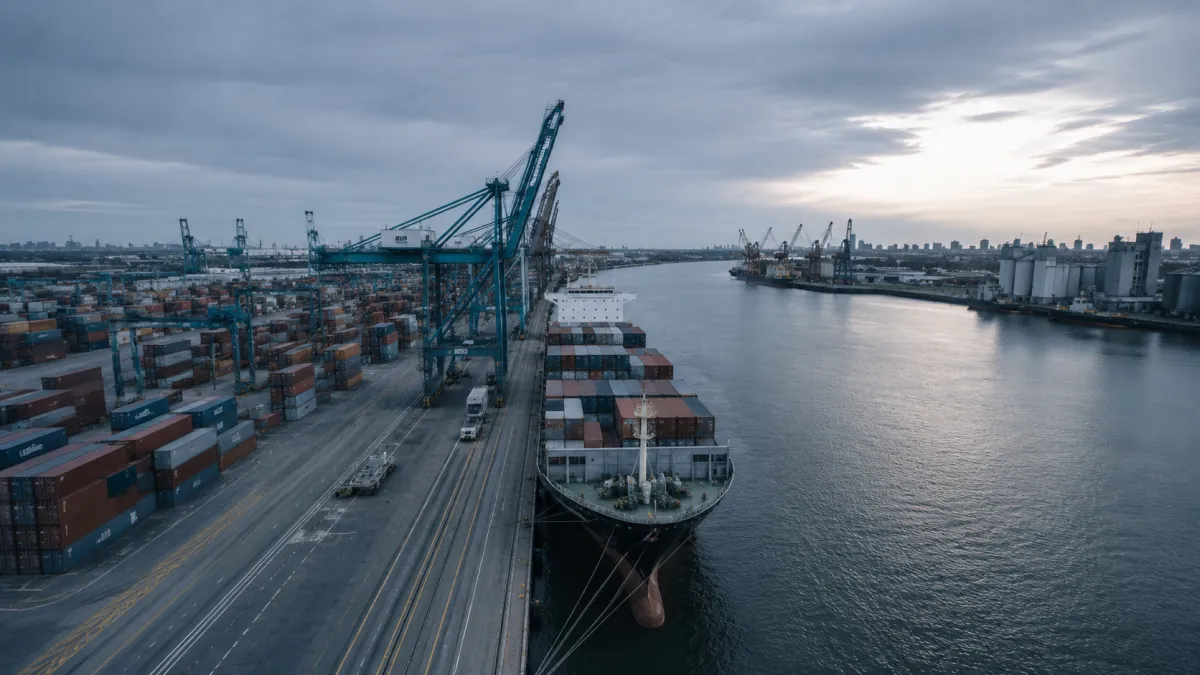
  • Infraestructura, Logística y Transporte

    Corredores productivos, infraestructura vial, ferroviaria, portuaria y aeroportuaria, nodos logísticos, movilidad de bienes, seguridad vial y eficiencia operativa. Diferencial institucional fuerte de FUCEIT.

    Read more
  • Formación y Capital Humano

    Capacitación profesional, educación técnica, certificación de competencias, reconversión laboral y empleabilidad.

    Read more
  • Tecnología e Innovación Institucional

    Inteligencia artificial, automatización, plataformas digitales, transformación digital, sistemas de información y herramientas para la toma de decisiones.

    Read more

Latest from FUCEIT

Opinion columns

View all columns
  • Las sillas vacías del costo logístico
    Infraestructura, Logística y Transporte

    Las sillas vacías del costo logístico

    El costo logístico argentino no se explica por un solo actor. Infraestructura, fiscalidad en cascada, gasoil, seguridad de cargas, flota envejecida y logística como infraestructura crítica: las sillas que el debate suele dejar vacías.

    This column responds to: «La carga cada vez más pesada que explica parte del «costo argentino»» — Gabriela Origlia, La Nación

  • Lo que no se ve detrás de la aplicación: trabajo, informalidad y futuro
    Trabajo y Futuro Laboral

    Lo que no se ve detrás de la aplicación: trabajo, informalidad y futuro

    La «uberización» no inventó la informalidad: la organizó, la aceleró y la volvió medible. Una agenda desde el trabajo para que la tecnología no sea una forma más eficiente de administrar la precariedad.

    This column responds to: ««Uberización» laboral, una tendencia que crece en los centros urbanos» — Néstor O. Scibona, La Nación

  • Lo que no se ve desde el asfalto: el bitrén mirado desde la cabina
    Infraestructura, Logística y Transporte

    Lo que no se ve desde el asfalto: el bitrén mirado desde la cabina

    Una perspectiva técnica y operativa rara vez presente en el debate público: la del piloto de bitrenes. Datos sobre radio de giro, frenado, viento cruzado y la economía emocional del oficio.

    This column responds to: «Bitrenes: hay más camiones de alta tecnología, pero en rutas antiguas y deterioradas» — Néstor O. Scibona, La Nación

Voices building the future

People and references

  • Sergio Aladio

    Sergio Aladio

    Presidente de FUCEIT · Secretario General del Sindicato de Camioneros de Santa Fe

  • Walter Andreozzi

    Walter Andreozzi

    Referente del ámbito laboral · Jornada Ley 27.802

  • Eleonora Peliza

    Eleonora Peliza

    Referente del ámbito laboral · Jornada Ley 27.802

  • Alicia Vázquez

    Alicia Vázquez

    Especialista en derecho laboral · Jornada Ley 27.802

  • Jorge Colina

    Jorge Colina

    Economista · Panelista en jornadas FUCEIT

  • Ignacio Foconi

    Ignacio Foconi

    Referente del ámbito laboral · Jornada Ley 27.802

  • María Victoria Acosta

    María Victoria Acosta

    Referente del ámbito laboral · Jornada Ley 27.802

  • Hebe García Borrás

    Hebe García Borrás

    Referente del ámbito laboral · Jornada Ley 27.802

FUCEIT School

Training and human capital

View training
  • Actualización en Modernización Laboral

    Marco normativo, relaciones laborales y desafíos actuales del trabajo, con especialistas, abogados y referentes del ámbito laboral.

  • Logística y Transporte de Cargas

    Operación, seguridad vial, infraestructura y eficiencia del transporte de cargas, con perspectiva técnica y operativa.

  • Formación y Representación

    Educación de miembros y líderes, fortalecimiento de organizaciones laborales y construcción colectiva.

  • Tecnología y Futuro del Trabajo

    Automatización, plataformas digitales y su impacto en el empleo, la protección social y la productividad.

Applied knowledge

Featured publications

View all publications
  • Report

    The false dilemma of truck dependence: logistics, intermodality and economic development in Argentina

    A report that challenges the settled idea that Argentina's logistics problem is explained by its dependence on trucking. Around 88% of domestic freight measured in tonne-kilometres moves by road, yet international comparison shows that this concentration, on its own, does not predict performance: New Zealand relies on trucks more than Argentina does and ranks forty-seven places higher in the World Bank index. What organises the system is distance —rail only becomes competitive beyond 200 to 400 kilometres— together with the conditions under which trucks operate: infrastructure, intermodality, fleet age, input costs, port and customs times, digitalisation and regulatory stability. The guidelines it proposes aim at complementarity between modes rather than at modal split targets.

  • Report

    Trade unionism and the application of Artificial Intelligence in the workplace

    The advance of Artificial Intelligence in the workplace demands a proactive response, based on dialogue and collaboration among unions, companies and government. The key is not resistance, but building a balance that protects fundamental rights while harnessing the benefits of efficiency and productivity. In the freight transport sector, the challenge is particularly relevant. Autonomous vehicle technology is transforming the industry and raises questions about employment, road safety and the maintenance of fair labour standards. Ongoing training and education are the pillars for ensuring that the human factor remains, as in other industries, an indispensable asset. We invite you to explore this strategic perspective on the challenges of A.I. in our industry and the importance of an equitable technological transition.

  • Report

    Times of Transformation: Trade Unions in the Age of Artificial Intelligence

    Artificial Intelligence has ceased to be a futuristic projection and has become a force that redefines the working environment and the nature of tasks. Faced with this scenario, strategic short-sightedness is not an option for the labour movement. It is imperative that trade unionism adapt its collective bargaining strategies, take an active part in the definition of technology policies and guarantee fair conditions in an economy where automation is beginning to take centre stage. We analyse how the history of the industrial revolutions offers us key lessons for approaching this new paradigm shift with clarity and commitment. We invite you to read the full analysis and discover how to integrate technology to strengthen the worker's role in this new era.

  • Report

    State of Road Safety at the Global Level — Comprehensive Report 2025

    Road safety does not depend on regulations alone; it depends, fundamentally, on knowledge, prevention and collective commitment. With that conviction, FUCEIT, in coordination with the Provincial Road Safety Agency and the Santa Fe Truck Drivers Union, is promoting a series of training and awareness sessions on road accident science and road safety, held in various localities across the province. These gatherings bring together workers, provincial and municipal authorities, specialists and institutional referents in a space for training and exchange aimed at understanding the challenges posed by road crashes from a comprehensive perspective. Through the analysis of statistics, evidence, experiences and real cases, they encourage the adoption of tools that contribute to safer driving and to the construction of more responsible road environments. For FUCEIT, road safety is a strategic challenge that requires coordination among the State, workers' organizations, the academic sector and civil society. Prevention cannot be limited to enacting regulations; it must be grounded in education, continuous training and the generation of applied knowledge that strengthens the capacities of those who travel and work on our roads every day. We believe that every training opportunity represents a chance to turn knowledge into action and commitment into prevention. Because behind every statistic there is a person, a family and a community that deserves to travel in safer conditions. Promoting a road culture based on shared responsibility is also a way of contributing to sustainable development and the protection of life.

  • Report

    Migration, work and human capital: the silent challenge of Argentine development

    A nation's capacity to retain and attract talent is a critical determinant of its competitiveness in the global knowledge economy. Argentina is currently going through complex migratory dynamics: while it maintains a historical tradition of receiving regional immigration, it is experiencing a sustained outflow of young professionals to destinations outside the region, a phenomenon that may compromise the country's productive and technological capacity in the long term. This «silent challenge» is not merely a demographic matter, but a symptom of structural weaknesses in the national environment when it comes to retaining human capital. The loss of trained professionals, whose initial education is usually financed by the State itself, represents a form of national decapitalisation that limits innovation and development. We invite you to explore in depth this analysis of how migratory flows shape our structural capacities and why development demands institutional conditions that make it possible both to retain our talent and to productively integrate those who choose our country.

  • Report

    Mortgage lending and development

    Mortgage lending is much more than a simple financial tool; it is a structural pillar for a country's economic development and social mobility. By channelling long-term savings into housing investment, this instrument not only energises key sectors such as construction and the materials industry, but also encourages economic formalisation and the accumulation of family assets. In Argentina, the historical lag in this market —with a stock that barely reaches 1.5% of GDP compared with 43% in the United States or 28% in Chile— is not due to a lack of demand, but to the persistent macroeconomic instability that prevents long-term contracts from taking hold. Rebuilding this market is essential in order to transform access to home ownership from an inherited privilege into an attainable possibility, thereby strengthening the middle class and social stability. We invite you to analyse this report on the strategic potential of mortgage lending as an engine of growth, stability and individual progress.

  • Report

    Effective sovereignty and territorial control

    History shows us that sovereignty is not guaranteed solely through formal or legal recognition, but through the concrete and sustained exercise of power over space. A State's capacity to occupy, integrate and defend its territory is what ultimately transforms a geographical surface into a protected strategic asset. In the face of contemporary challenges, institutional weakness, the isolation of critical areas and the underuse of resources act as vulnerability factors that invite the intervention of external actors. Strengthening our sovereignty requires integrating the territory with infrastructure, economic activity and an institutional presence that projects real power. We invite you to debate the fundamental role of territorial control and development in consolidating effective sovereignty for the country.

  • Report

    Geography, Logistics and Power: the return of spatial factors in the global economy

    An institutional report that re-examines the role of geography in the contemporary economy and argues that spatial factors —access to the sea, distance to markets, logistical connectivity and location along strategic corridors— have regained centrality in the face of supply chain disruptions and geopolitical tensions. Through international cases (Singapore, the Netherlands, South Korea, Bolivia, the United States, Australia) and the Argentine case, it shows that geography operates as a structural constraint that public policy can mitigate, but not fully neutralise.

Institutional network

Strategic partnerships

  • Sindicato de Camioneros de Santa Fe
  • Hermandad Internacional de Camioneros
  • INTI
  • OIT
  • CAME
  • UIA
  • University of Illinois
  • UTN — Facultad Regional Santa Fe

Stay up to date

Join our community

Receive reports, columns and the FUCEIT agenda. Follow us also on LinkedIn, our main network.